The Fall Exterior Cleaning Checklist for North Georgia
Overview
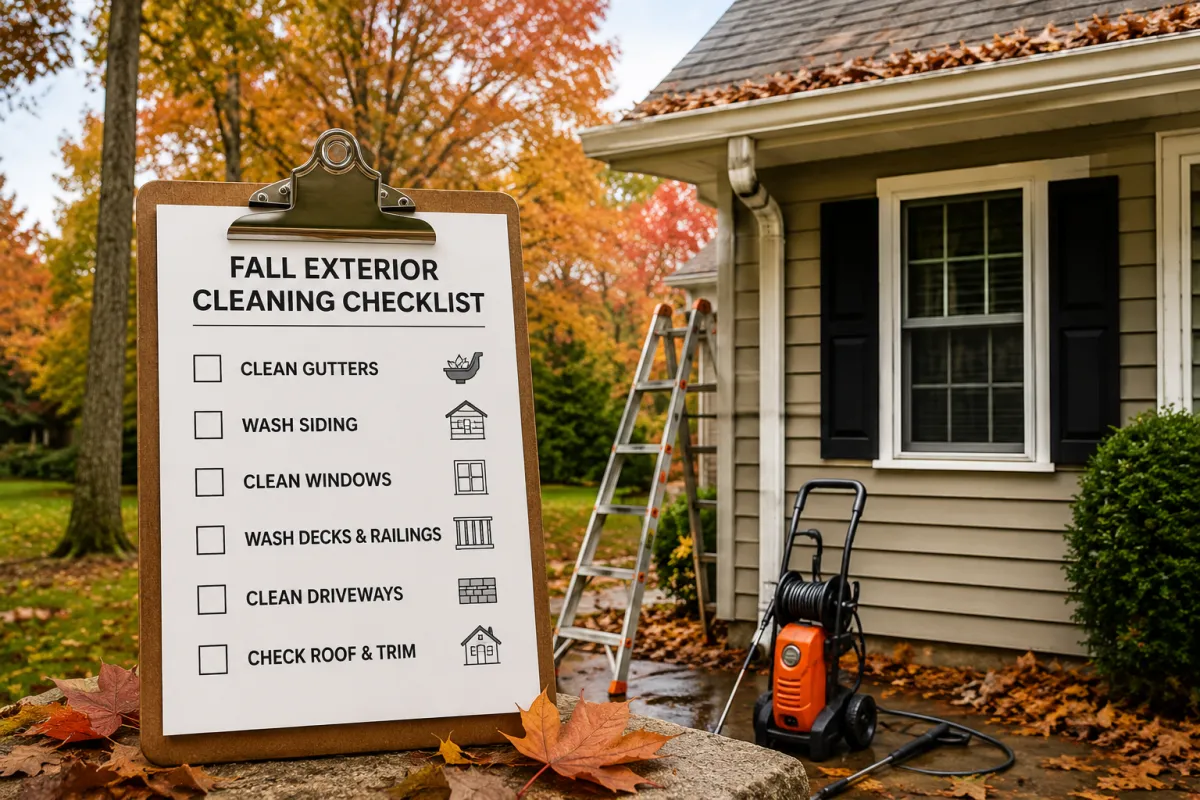
A fall exterior cleaning checklist is the most overlooked piece of home maintenance in North Georgia, and skipping it is what turns a cheap cleaning into an expensive repair. A Georgia summer leaves behind baked-on grime, a full season of algae and mildew growth, and pollen sludge sitting in the gutters, and then hardwood leaf drop clogs those gutters right before four straight months of winter rain. Clearing gutters, treating organic growth on the roof and siding, and washing hard surfaces before the cold sets in keeps moisture from sitting against your home all winter. For most Cherokee and Pickens County homes, the right window is late October through mid November, after the leaves finish and before the sustained rain starts.
Want the whole list handled in one visit? Grime Fighters serves Canton, Woodstock, Jasper, and Ball Ground. Get a free estimate and we will build it around your fall schedule.
Why Fall Is the Window Everyone Skips
What a Georgia Summer Leaves Behind
Spring cleaning gets all the attention. Fall is when your house actually needs the help.
By late September a North Georgia home has been through months of heat, humidity, thunderstorms, and pollen. Algae and mildew have had their best growing season of the year on the north side of the house, on the shaded roof plane, and along every surface where a downspout puts water. Concrete has picked up a full summer of organic film and whatever tracked across it. Pollen from March has been sitting in the bottom of the gutters since May, packed into a dense sludge that holds water.
None of that improves on its own over the winter. It sits, stays damp, and keeps working on the surface it is attached to.
Why Letting It Sit All Winter Makes It Worse
Here is where people get Georgia winters wrong. They think of winter as a pause. Cold weather, nothing growing, deal with it in spring.
Georgia winter is not a freeze. It is wet. Cherokee and Pickens County get steady rain from December through March, with short cold snaps rather than a sustained hard freeze. That means surfaces stay wet for long stretches with very little sun and very little drying, which is not a pause on organic growth so much as a slow, humid soak.
Mildew and algae do not die off in a Georgia winter. They slow down and keep their hold, and they come out of March ahead of where they went into December. Meanwhile every clogged gutter is overflowing onto fascia and foundation with every rain, for four months, with nothing to interrupt it.
So the choice in October is not clean now or clean later. It is clean now, or clean later on top of four extra months of damage.
The Fall Checklist, In Order
Gutters and Downspouts Before the Rain
This is item one and it is not close.
Timing matters more here than with anything else on the list. Go too early and the oaks are still dropping, so you are doing it twice. North Georgia hardwoods hold on well into November, and sweet gum keeps dropping those seed balls after the leaves are done. Those seed balls are the single most effective downspout plug in nature. Wait until the drop is essentially finished, generally the first half of November in Cherokee and Pickens County, then clear everything at once.
Clear the troughs, flush the downspouts, and confirm water is actually running out the bottom rather than just disappearing into the pipe. A downspout that stays silent during a storm is a downspout that is blocked.
While you are at it, look at the outside face of the gutters. Dark vertical streaking there is a separate problem that a cleaning will not touch, and it needs a brightening treatment to remove.
Roof: Moss and Organic Growth Going Into Winter
The roof is the item with the most money attached to it.
Black streaking is Gloeocapsa magma, an algae that feeds on the limestone filler in asphalt shingles. Moss, more common on shaded Jasper and Big Canoe roofs, is a plant that grows under shingle edges and holds water against the roof like a sponge. Both are worse going into a wet winter, because both hold moisture on a surface designed to shed it.
A fall soft wash kills the growth before it spends the winter sitting wet under saturated conditions. It also matters for what comes after: moss treated in the fall dies back and releases through the winter rain rather than needing to be pulled off.
High pressure has no place on a roof at any time of year. It strips granules, voids most shingle warranties, and drives water under the courses.
Siding: Clearing Summer Buildup
A house wash in fall does something a spring wash does not. It removes the food source before the wet season instead of after it.
The growth on siding is not sitting on top like dust. It works into the texture, into the seams between courses, and into porous painted or stucco surfaces. Rinsing makes it look better for a couple of weeks and then it returns, because the colony underneath was never killed. Soft washing kills at the root, which is why a proper fall house wash still looks good in March.
Pay attention to the shaded elevation and the lower courses, which is where splash-back keeps the wall wet. Those are the areas that will be worst by spring if they go into December already growing.
Concrete, Decks, and Walkways Before Freeze
Hard surfaces come last, and there is a safety reason to not skip them.
Shaded concrete in North Georgia grows an algae film that turns genuinely slick well before it looks dirty enough to bother with. Front steps, a walkway cut into a slope, a shaded patio, a pool deck. Wet winter conditions plus algae film is how people fall on their own property, and it is worse on the mountain lots where paths run across a grade.
Wood decks and fences need the low pressure treatment, not a pressure washer, since force gouges the grain and raises fibers. If a deck is due for sealing, clean it in fall and seal it while there are still dry days available. Sealing before winter keeps water out of the boards through the wet months.
What Happens If You Wait Until Spring
A Full Winter of Moisture Against the Surface
Everything on that checklist is a moisture management task, and skipping it means signing up for four months of water sitting where it should not.
Clogged gutters overflow onto fascia board and behind siding with every rain. Fascia is usually wood, it soaks from behind where nothing dries it out, and the first thing the homeowner sees is a soft spot or staining on the soffit, at which point the repair is carpentry rather than cleaning. At ground level, concentrated overflow trenches out the soil at the base of the wall and pushes water toward the foundation and crawlspace.
On the roof, moss holds water on the shingles all winter. On siding, growth spreads into surfaces staying damp for months. None of this is dramatic on any single day. It is the accumulation that gets expensive, and almost nobody notices it happening.
Slip Hazards on Wet, Algae-Covered Concrete
The risk people underestimate is the one at their own front door.
Algae-filmed concrete gets slick the moment it is wet, and in a Georgia winter it is wet constantly. Steps, sloped walkways, and shaded entry paths are exactly where a fall does damage, and they are also the areas that get the least sun and grow the most film.
If your steps or walkway have gone even slightly green, they are already slippery. That is not a spring curb appeal item, it is a fall safety item, and it takes an hour to fix.
Scheduling Your Fall Service in Cherokee and Pickens County
The Right Weeks to Book
The target window is late October through mid November.
Gutters specifically should wait until the hardwood drop is essentially finished, which in Cherokee and Pickens County generally means the first half of November. Roof, siding, and concrete can be done earlier in October without any downside, so if you are splitting the work, those go first and gutters go last.
Call ahead of the window rather than into it. Everyone in Cherokee County remembers their gutters the same week, usually right after the first heavy November rain, and that is the week the calendar fills. Booking in early October for a November date gets you the slot you want.
On temperature: no, it is not too cold to wash in late fall here. Soft washing works fine in Georgia's fall temperatures, and the limiting factor is a hard freeze, which we rarely get before late December. November is a good working month.
Bundling the Whole Checklist Into One Visit
This is where the fall checklist actually saves money rather than costing it.
Crew setup, travel, water connection, and chemical mixing are fixed costs that get paid once whether you clean one surface or five. Booking gutters in November, the house in March, and the driveway in June means paying that setup three times. Running the whole checklist in one visit spreads it across everything.
Sequence matters and is a second reason to bundle. The right order is top down: roof, then gutters, then siding, then concrete and decks. Every surface sends dirty water onto whatever is below it, so cleaning the driveway before the house means cleaning the driveway twice. One crew, one visit, correct order.
If the budget only covers part of it this year, do gutters and roof. Those are the two items where waiting causes damage rather than just looking bad.
Frequently Asked Questions
What's the best month for fall exterior cleaning in North Georgia?
Late October through mid November is the window for most of the checklist. Roof, siding, and concrete can be done anytime in October. Gutters should wait until hardwood leaf drop is essentially finished, which in Cherokee and Pickens County usually means the first half of November, and should be completed before the sustained winter rain arrives.
Should gutters be cleaned before or after the leaves finish falling?
After. Cleaning in early October while oaks and sweet gums are still dropping means you will be doing it again in December. North Georgia hardwoods hold their leaves well into November, so the efficient move is to wait until the drop is basically over and clear everything in one pass before the winter rain starts.
Is it too cold to pressure wash in late fall in Georgia?
No. Soft washing and pressure washing both work fine in Georgia's fall temperatures, and hard freezes rarely arrive here before late December. November is a good working month, and it is often easier to get on the schedule than spring. The only real limitation is a stretch of freezing weather, which is uncommon this early in the season.
Can the whole fall checklist be done in one visit?
Yes, and it is the cheapest way to do it. Setup, travel, water connection, and mixing are fixed costs charged once regardless of how many surfaces get cleaned, so bundling roof, gutters, siding, concrete, and decks into a single visit costs meaningfully less than booking them separately. It also guarantees the correct top-down sequence, so nothing clean gets dirtied by the next surface.
Grime Fighters offers free estimates across Canton, Woodstock, Jasper, and Ball Ground. Send us your address and we will get your fall checklist on the calendar before the rain sets in.