Soft Wash vs. Pressure Washing: What's the Difference?
Overview
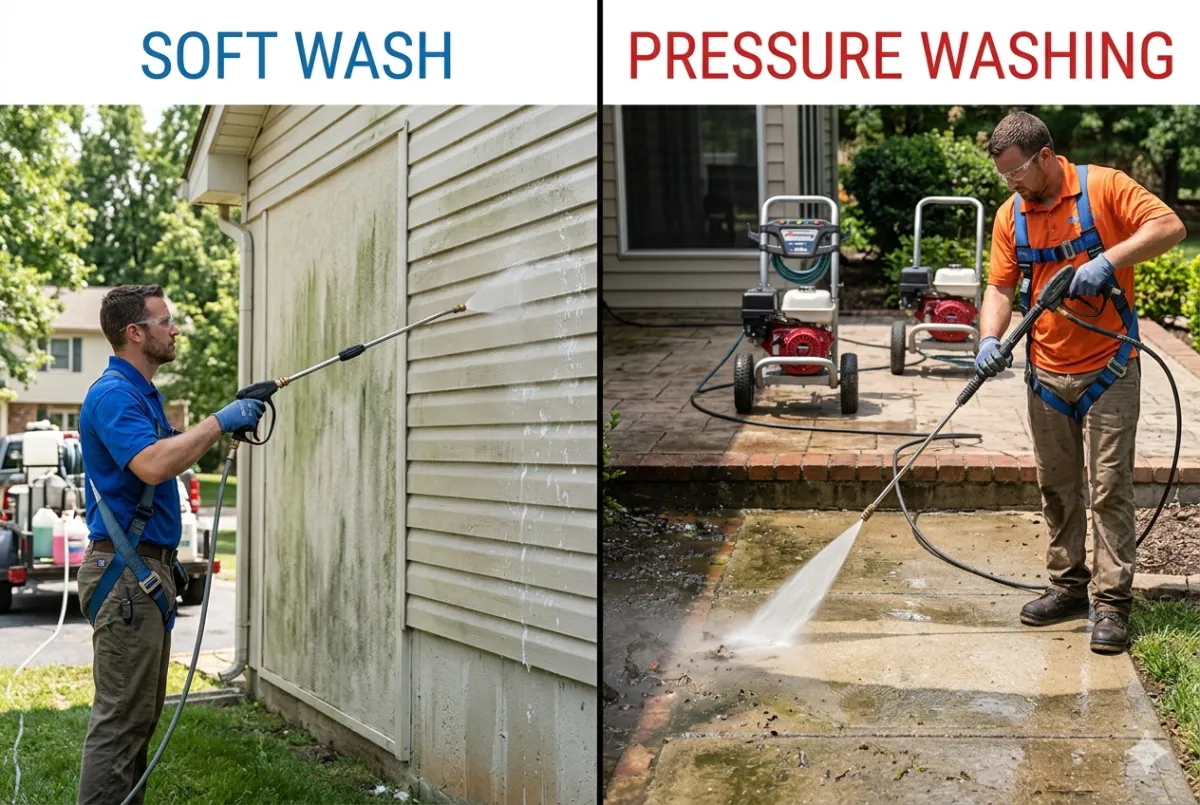
Soft washing vs. pressure washing comes down to one thing: matching the cleaning method to the surface. Soft washing uses low water pressure combined with specialized cleaning solutions to safely remove mold, algae, and organic buildup from delicate surfaces like siding, roofs, and painted wood. Pressure washing relies on high-force water to blast away grime from hard, durable surfaces like concrete driveways, sidewalks, and brick. Using the wrong method on the wrong surface can strip protective granules from shingles, gouge wood, or crack older concrete and those are the kind of mistakes that cost far more to fix than the original cleaning would have saved. Knowing which approach your home actually needs is the first step to getting results that last.
Get a Free Quote Grime Fighters serves Canton, Woodstock, Jasper, and Cherokee County. Visit gfpressurewash.com to get started.
What Is Soft Washing?
How the Cleaning Solution Does the Heavy Lifting
Soft washing works differently than most homeowners expect. Instead of relying on water pressure to physically scrub away buildup, it uses biodegradable cleaning solutions to kill and lift organic growth at the source. The solution is applied at low pressure -- typically under 500 PSI -- and allowed to dwell on the surface before being rinsed away. That dwell time is where the real work happens. The cleaner breaks down mold, algae, mildew, and bacteria rather than just displacing them. That's why soft-washed surfaces stay cleaner longer -- you're eliminating the growth, not just pushing it around.
What Surfaces Soft Washing Is Designed For
Soft washing is the right call for any surface that can't handle high water pressure without taking damage. That includes vinyl, wood, and fiber cement siding; asphalt shingles and tile roofing; painted surfaces and trim; stucco and EIFS exteriors; and screened enclosures. If water pressure alone could damage or strip the surface, soft washing is the method that gets it clean without the risk.
What Is Pressure Washing?
When High Pressure Is the Right Call
Pressure washing uses water at high force typically 1,500 to 3,500 PSI or more -- to mechanically remove surface contamination. It's effective and efficient when used on materials that can handle the force. For dense, hard surfaces with caked-on grime, oil stains, or heavy buildup, high pressure cuts through quickly and gets results that would be hard to achieve any other way.
Surfaces That Can Handle Pressure Washing
Pressure washing is well-suited for concrete driveways and sidewalks, brick and concrete block, paver patios and retaining walls, and metal surfaces. The key factor is density. Dense, non-porous materials absorb the force of high-pressure water without damage. Soft, painted, or granular surfaces cannot which is exactly where most homeowner mistakes happen.
Why Using the Wrong Method Can Damage Your Home
What Happens When High Pressure Hits Your Siding
Vinyl siding looks durable, but high-pressure water at close range can crack panels, force water behind the siding, and cause moisture damage inside your walls. Wood siding is even more vulnerable high pressure splinters the surface and drives water deep into the grain, creating conditions for rot. Even fiber cement siding can have its finish stripped by too much pressure at the wrong angle.
The damage isn't always visible right away. Water intrusion behind siding can go unnoticed for months before it shows up as mold, warped panels, or rot inside the wall cavity. By then, the repair cost has grown well beyond what the cleaning ever cost.
Why Your Roof Should Never See a Pressure Washer
This is one of the most common and costly mistakes homeowners make. Asphalt shingles have a layer of protective granules that shield the underlying mat from UV exposure. A pressure washer strips those granules off fast. Once they're gone, the shingle degrades rapidly -- and most roofing manufacturers will void your warranty if they find evidence of pressure washing.
Beyond the warranty issue, high pressure can crack tiles, displace flashing, and force water underneath the roof surface where it causes structural damage. Soft washing is the only method that removes algae and organic growth from a roof safely and without voiding your coverage.
Have questions about the right method for your home? Get a free quote from Grime Fighters visit gfpressurewash.com and we'll get back to you fast.
How Grime Fighters Decides Which Method to Use
Our Process Assessment Before Every Job
Before a single drop of water touches your property, we assess the surfaces we're working with. That means looking at siding material, roof type, concrete condition, and the specific type of buildup we're dealing with. A house with vinyl siding and an asphalt roof gets treated completely differently than a concrete driveway with oil stains.
Most jobs involve both methods soft washing for the house and roof, pressure washing for the driveway and walkways and we dial in the equipment and chemistry for each surface individually. We don't quote jobs over the phone without seeing the property for exactly this reason. Every home is different, and assuming instead of assessing isn't something we're willing to do.
Why Industry Knowledge from Amchem Wash Supply Matters
Grime Fighters isn't just another company with a pressure washer in the back of a truck. Dylan built this business after years managing Amchem Wash Supply, working directly with professional contractors and top-tier equipment every day. That background means a real working knowledge of the right chemicals, correct application techniques, and the equipment specs that actually match the job.
Most operators learn by trial and error on customers' homes. We came in already knowing the difference between what works and what causes damage and that's a distinction that shows up in every job we do.
Frequently Asked Questions
Is soft washing safe for all types of siding?
Yes. Soft washing is designed specifically for surfaces that can't handle high pressure. The biodegradable cleaning solutions are safe for vinyl, wood, fiber cement, stucco, and painted surfaces. Application pressure stays low enough that it won't force water behind panels or damage finishes. It's the industry-standard method for house washing for exactly this reason.
Can pressure washing damage my concrete driveway?
It depends on the pressure setting and the condition of the concrete. Older concrete with existing cracks or surface spalling can be damaged by very high pressure or by holding the wand too close. Professional operators use the right PSI for the surface and maintain a consistent distance to avoid etching or uneven cleaning patterns. A consumer washer with inconsistent technique is more likely to cause damage than a professional service with proper equipment.
How long does soft washing keep a surface clean?
A properly soft-washed surface typically stays clean for one to three years, depending on the environment. Homes in heavily wooded areas or those with north-facing walls that stay damp tend to see regrowth sooner. In Cherokee County's humid climate, most homeowners schedule exterior cleaning once a year to stay ahead of algae and mold before it takes hold again.
Do I need different services for my roof and my driveway?
Yes and that's completely normal. Your roof needs soft washing; your driveway needs pressure washing. These are different methods using different equipment and different chemistry. A company that tells you they'll pressure wash your entire property, roof included, is either uninformed or cutting corners. Neither is something you want on your home.
Ready to get a free quote? Grime Fighters serves Canton, Woodstock, Jasper, and Ball Ground. Visit gfpressurewash.com to schedule your free estimate.