Fence Cleaning in Woodstock, GA: Wood vs. Vinyl
What Wood and Vinyl Each Need
Overview
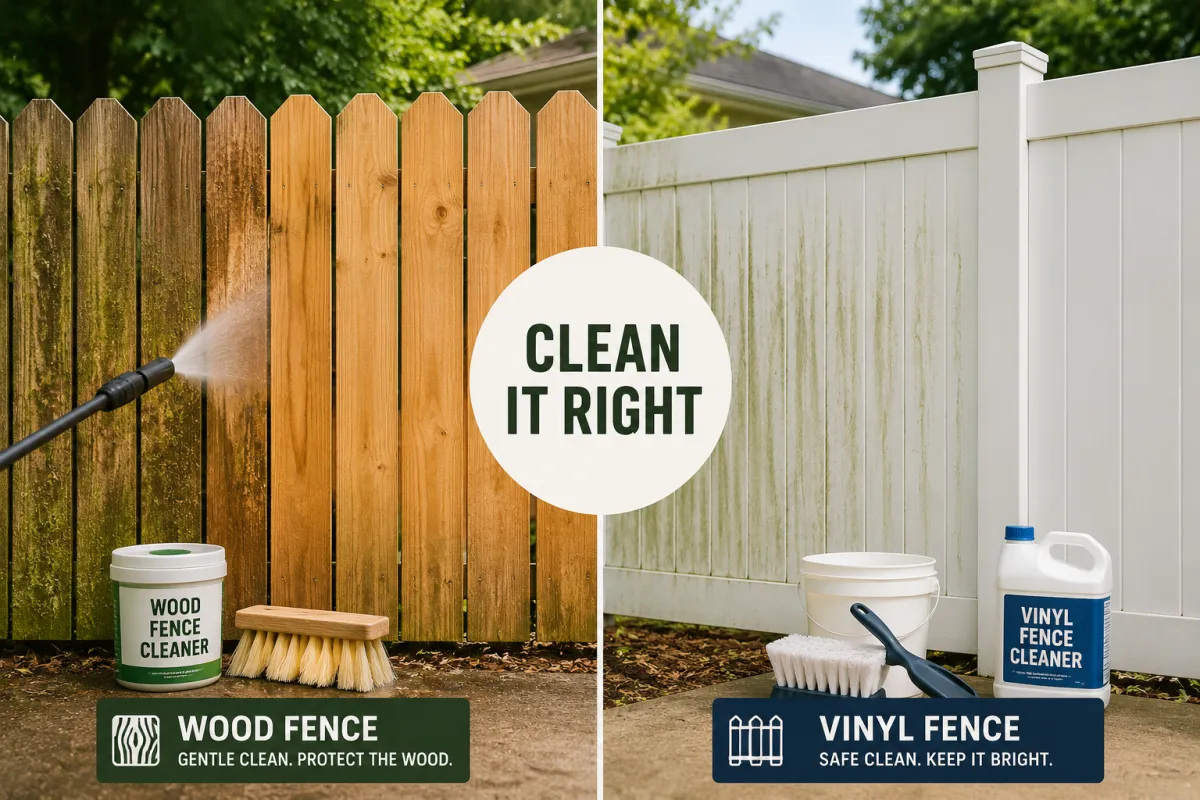
Fence cleaning in Woodstock, GA comes down to one question that decides everything else: is it wood or is it vinyl? A wood fence holds moisture and grows mold and algae that break the fibers down over time, so it needs low pressure paired with a cleaning solution that kills the growth rather than just knocking it loose. A vinyl or composite fence develops a green algae film and a chalky oxidized layer, both of which respond to soft washing and neither of which needs force. Using high pressure on either material causes damage that only shows up after the surface dries, and by then it is permanent.
Fence gone green or gray? Grime Fighters serves Woodstock, Canton, Jasper, and Ball Ground. Get a free estimate and we will tell you what your fence actually needs.
Why Fences Get Worse Faster Than Anything Else on Your Property
Ground Contact, Shade, and Constant Moisture
Your fence has the hardest job on the property and gets the least attention.
Start with the bottom. Fence pickets sit inches off the ground, sometimes touching it, where soil wicks moisture upward and splashback throws dirt onto the boards every time it rains. Grass and mulch pile against the base and hold water there. That bottom eight inches of a fence stays wet longer than any other exterior surface on your property.
Then there is shade. Fences run along property lines, which is exactly where the trees are. Both sides of a fence are rarely equal, and the shaded side is doing considerably worse than the side you look at from your kitchen window.
And unlike siding, a fence gets water from both directions with nothing behind it to dry against. It is exposed on all sides and drying on none.
The Green Film That Turns Into Rot
That green haze on a fence is not dirt and it is not stain. It is living algae, and on wood it is the leading indicator of a problem developing underneath.
Algae and mold hold moisture against the wood. Wood that stays wet softens. Softened wood lets more moisture in, which supports more growth, which holds more moisture. It compounds, and eventually the fibers break down enough that a picket goes soft at the bottom and a post starts to give at the ground line.
The practical version: a fence cleaned every year or two lasts substantially longer than one left to go green. Cleaning a fence is not cosmetic maintenance. It is the cheapest thing you can do to keep from replacing it.
Cleaning a Wood Fence the Right Way
Why Pressure Destroys Wood Fence Boards
Fence pickets are thinner and softer than deck boards, which makes them even easier to wreck. Most fences in Cherokee County are pressure-treated pine or cedar, and both give way fast under a concentrated stream.
Too much pressure carves out the soft grain and leaves a ridged, fuzzy surface. Those raised fibers then hold water better than a smooth board did, so a fence blasted clean this spring will grow back green faster than it did before. You made the problem worse while thinking you solved it.
On an older fence there is a second risk. High pressure finds every loose picket, split board, and tired nail, and it will pop them. We have seen fences come apart under a wand more than once.
Low Pressure and Solution-First Cleaning
The method that works on wood is solution first, pressure last.
A cleaning solution goes on at the right dilution and dwells long enough to kill the algae and mold in the grain, not just on top of it. Then a low pressure rinse carries off what died. The wood comes back to a consistent color because the growth is gone, not because the top layer got sanded off by water.
Dilution matters as much here as it does anywhere. Too weak and the fence looks fine for six weeks before the green returns. Too strong and you lighten the wood unevenly and damage the fibers, which produces a blotchy fence with no easy fix. Coming out of Amchem Wash Supply, the chemistry side of this is the part we know best, and on fences it is the whole job.
The landscaping along a fence line needs pre-wetting and a rinse afterward. Fence lines are usually where the good plantings are, and concentrated solution left sitting on them will kill them.
Cleaning a Vinyl or Composite Fence
Algae Film and Chalking
Vinyl gets sold as maintenance-free. It is not. It is rot-free, which is a different thing.
Two things happen to vinyl fencing in Georgia. First, algae grows on the surface as a green film, heaviest on the shaded side and along the bottom. Second, UV exposure oxidizes the vinyl over years, leaving a chalky layer that dulls the color and rubs off on your hand.
Neither of those requires force to remove. A soft wash solution breaks down the algae film, and the oxidized layer lifts with the right cleaner. What people typically do instead is attack a vinyl fence with a pressure washer, which can etch the surface. Etched vinyl looks fine wet and then dries with a permanent dull patch, and it holds dirt more readily from that point on.
Why Soft Washing Restores the Original Color
A vinyl fence that looks faded is usually not faded. It is coated.
Remove the algae film and the chalking, and the original color is still under there. This is the most satisfying result in exterior cleaning, because homeowners genuinely believe their fence has aged out and are ready to price a replacement. Then it gets soft washed and it looks close to new.
The difference is that soft washing removes what is sitting on the vinyl without touching the vinyl. Pressure removes what is sitting on the vinyl and takes a layer of the vinyl with it. Same appearance on day one. Very different fence three years out.
Wood, vinyl, or both on one property? Send us your address and we will price it correctly for the material.
Fence Cleaning as Part of the Bigger Picture
Bundling Fence With House and Driveway
A fence is rarely worth a dedicated trip. It is a short job, and the setup for a short job costs the same as the setup for a long one.
Which is why fence cleaning makes the most sense added onto a visit that is already happening. The crew is on site, water is connected, solution is mixed, and the fence becomes an extension of the same job rather than its own appointment with its own minimum charge.
The natural pairings are house wash plus fence, since both are soft wash work with similar solution, and driveway plus fence, since both frame how the property reads from the street. If you are already thinking about a house wash this season, ask what adding the fence looks like. The answer usually surprises people.
Sealing and Staining After a Wood Fence Clean
If you are planning to stain or seal a wood fence, cleaning is not optional. It is the prep.
Stain applied over algae seals the growth in against the wood, where it keeps working with no air and no way to treat it. The finish also will not bond properly to a dirty surface, so it fails early and unevenly.
Clean first, then give it 48 to 72 hours of dry weather before applying anything. Fences dry faster than decks because air moves through both sides, but the shaded bottom section is always the slowest, and that is exactly the part you cannot afford to seal wet.
Frequently Asked Questions
Can a badly weathered wood fence be restored by cleaning?
In most cases yes, considerably more than homeowners expect. Gray weathering and green algae sit on and just inside the surface, and a proper solution-based cleaning brings back much of the original tone. What cleaning cannot fix is structural decay. If pickets are soft, crumbling, or posts move at the ground line, those boards need replacing. Cleaning restores appearance and slows further breakdown, but it does not rebuild wood that has already rotted.
Will cleaning damage the stain on my fence?
A correctly diluted solution at low pressure will not strip a stain that is still sound. Stain that is already failing or worn thin will lift in those areas, because cleaning exposes what had already broken down. Let us know before we start if you want to preserve the existing finish, and we will adjust the solution strength and test a hidden section first.
How often should a fence be cleaned in Georgia?
Every one to two years for most fences in Cherokee County. Fences in heavy shade, along tree lines, or with grass and mulch piled against the base often need it annually. Georgia's humidity keeps the bottom of a fence damp nearly year-round, so growth re-establishes faster here than in drier climates.
Can you clean a fence and a deck in the same visit?
Yes, and it is the sensible way to do it. Both are wood surfaces requiring the same low pressure and solution-first approach, so the crew is already set up for exactly that work. Doing them together also gets both surfaces on the same maintenance schedule, which keeps the property looking consistent instead of clean in patches.
Grime Fighters offers free estimates across Woodstock, Canton, Jasper, and Ball Ground. Send us your address and we will get you a number on your fence without a three-day wait.