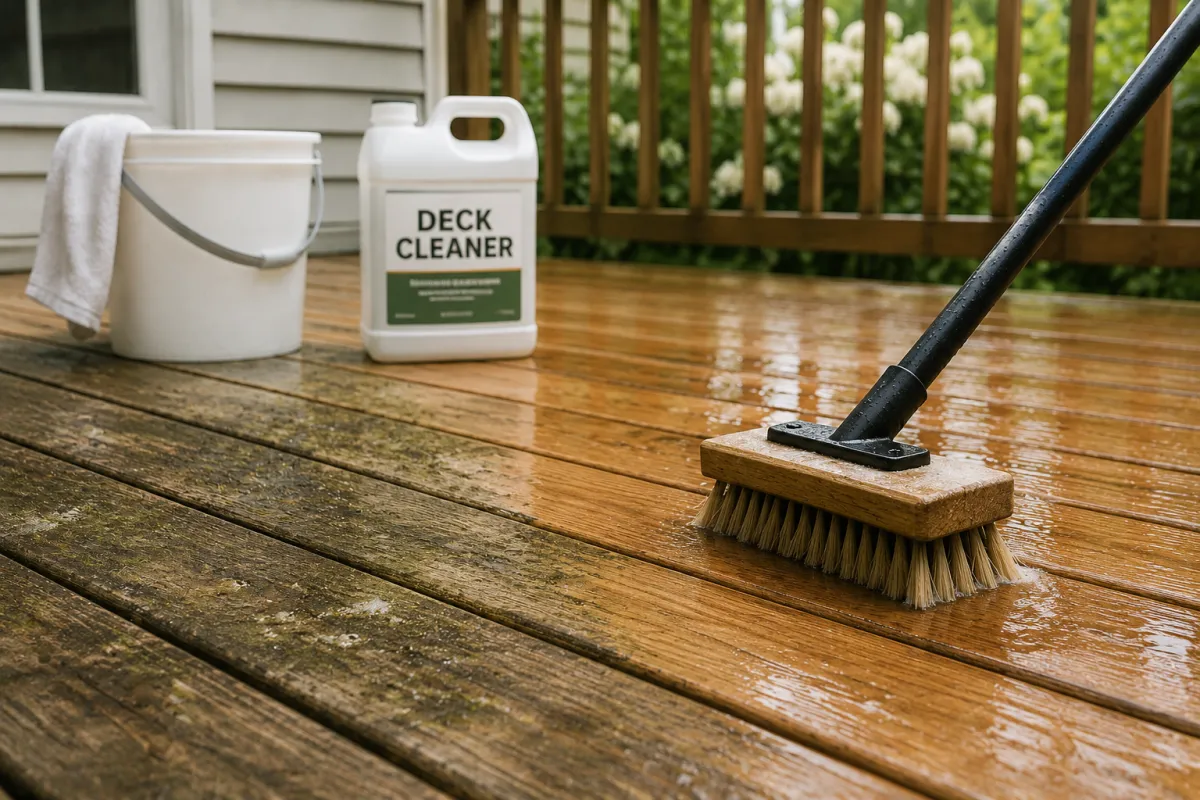
Deck Cleaning in Canton, GA Without Destroying the Wood
How to Get It Clean Without Destroying the Wood
Overview
Deck cleaning in Canton, GA has to account for one thing most homeowners never think about: wood absorbs moisture, and Georgia's humidity keeps it damp for most of the year. That moisture feeds mold and mildew from inside the board outward, which is why a deck can look dirty again weeks after somebody surface-blasted it. High pressure on wood gouges the grain, raises fibers, and strips finish off in seconds, and the damage usually does not show until the boards dry. The correct approach is low pressure paired with a cleaning solution that kills the organic growth at the root, followed by proper dry time before anything gets sealed or stained.
Got a deck that has gone gray or green? Grime Fighters serves Canton, Woodstock, Jasper, and Ball Ground. Get a free estimate and we will tell you what your boards actually need.
What Georgia Humidity Does to a Wood Deck
Mold and Mildew Growing From the Inside Out
Wood is not a sealed surface. It is a bundle of fibers that pulls in water and holds onto it, and in a climate like ours it rarely gets a chance to fully dry out. Spring and summer bring humidity that sits in the eighties for weeks at a stretch. Afternoon storms soak the boards, and then the air is too wet to pull that moisture back out.
Mold and mildew do not just sit on top of that. They work down into the grain where the moisture is. That is the part homeowners miss. You can scrub the surface until the boards look lighter and still leave the colony intact underneath, which is why the green comes back so fast.
Cleaning a deck properly means treating the organic growth, not just moving it around. That is a chemistry problem, not a pressure problem.
Why Shaded and North-Facing Decks Go First
Walk a neighborhood in Canton and you can predict which decks are worst without checking a single one. The ones under tree canopy and the ones facing north go first, every time.
Sun is what dries a deck out after rain. Take the sun away and the board stays wet for hours or days longer after every storm. Add leaf litter, pollen, and whatever drops out of the canopy, and you have created an ideal environment for algae and mildew.
If your deck sits in shade most of the day, you are not doing anything wrong. You just have a deck that needs attention on a shorter cycle than your neighbor's.
Why a Pressure Washer Ruins Decks
Gouging, Furring, and Raised Grain
A consumer pressure washer will put out enough force to carve a line into a deck board. Not scratch it. Carve it.
Wood is soft, and the softer sections between the grain lines give way first. Run a wand across a board with too much pressure and you strip out that soft material while the harder grain stays put. What you get is a ridged, washboard surface people call furring or raised grain. Once it is there, sanding is the only fix, and on a full deck that is a weekend of work with a floor sander.
There is a second problem. Those raised fibers hold water better than a smooth board ever did. So a deck that got blasted with too much pressure is now more vulnerable to the exact mold problem the homeowner was trying to solve.
The Damage You Don't See Until It Dries
This is the part that catches people. A deck being pressure washed looks incredible while it is wet. The wood is dark, the contrast is dramatic, and the dirty water running off feels like proof it is working.
Then it dries. The gouging shows up. Wand marks appear as lighter stripes where the finish got stripped in overlapping passes. Any stain that was on there comes off unevenly, so you are left with a blotchy deck that now needs to be fully stripped and refinished to look right.
By the time this is visible, whoever did it is long gone. This is the single most common way we see a deck get worse instead of better.
The Right Way to Clean a Deck
Low Pressure Plus the Right Solution
The method that works is straightforward. You apply a cleaning solution at the correct dilution, let it dwell long enough to actually kill the mold and algae, then rinse at low pressure. The solution does the work. The water just carries away what the solution killed.
Dilution is where most of the skill lives. Too weak and the growth survives and returns within a month. Too strong and you damage the wood fibers and lift the finish, which is the same outcome as using too much pressure, just by a different route. Grime Fighters came out of running Amchem Wash Supply, so the chemistry side of this is the part we know cold.
Surrounding landscaping gets pre-wet and rinsed down afterward. Deck cleaning solution that is allowed to sit concentrated on your plants will kill them, and that is entirely avoidable with the right prep.
Composite vs. Wood vs. Pressure-Treated
These three are not the same job.
Pressure-treated pine, which is what most Cherokee County decks are built from, is soft and takes damage easily. It also grays and holds mildew readily. Low pressure and solution-first is the only sensible approach.
Hardwoods like ipe or cedar are denser and hold up better, but they have finishes that harsh chemistry will strip and discolor. These get a gentler solution and a test area before anybody touches the whole deck.
Composite decking gets treated as a soft wash surface. People assume composite is bulletproof, but the surface can be scarred by high pressure, and most manufacturers will void a warranty over it. Composite also grows a surface film of mold in shade just like wood does, so it is not maintenance-free, whatever the sales brochure said.
Not sure what your deck is built from or what it needs? Send us your address and we will sort out the right approach before we quote it.
What to Do After the Deck Is Clean
Dry Time Before Sealing or Staining
If you plan to seal or stain, this is the step that decides whether the finish lasts.
A deck that was just cleaned is saturated. Seal it too soon and you trap that moisture under the finish, which leads to peeling, cloudiness, and mildew growing beneath a sealed layer where nothing can reach it. You will be stripping it inside of a year.
Plan on 48 to 72 hours of dry weather before applying anything, and longer if the deck is shaded or the humidity is high. In a Georgia August, watch the forecast and give it the full window. The old trick still works: sprinkle water on a board, and if it beads instead of soaking in, the wood is not ready.
How Often a Georgia Deck Needs Cleaning
Most Cherokee County decks want a cleaning once a year. Shaded decks, decks under heavy tree cover, and decks with poor airflow underneath often need it closer to every eight or nine months.
Annual cleaning is also cheaper per visit than letting it go. A deck cleaned every spring needs a mild solution and a light touch. A deck that has not been cleaned in five years has growth embedded deep in the grain, probably some staining that will not fully lift, and it takes longer with more product. The homes that cost the most to clean are always the ones that waited longest.
Frequently Asked Questions
Will cleaning strip the stain off my deck?
A properly performed deck cleaning at low pressure with correctly diluted solution should not strip a stain that is still in good condition. Stain that is already failing, peeling, or worn thin will come off in those weak spots, because the cleaning reveals what was already gone. If your goal is to keep the existing stain, tell us before we start so we can adjust the solution strength and test an inconspicuous area first.
How long should I wait to seal after a deck cleaning?
Wait at least 48 to 72 hours of dry weather before sealing or staining, and longer for shaded decks or during high humidity. The wood needs to release the moisture it absorbed during cleaning. Sealing a damp deck traps that moisture underneath and causes peeling and mildew under the finish. Test by sprinkling water on a board. If it soaks in rather than beading up, the deck is dry enough.
Can composite decking be cleaned the same way as wood?
Composite is cleaned with a soft wash approach, same low pressure principle, but with a solution matched to the material. Composite resists rot but it still grows surface mold and algae in shaded, damp conditions. High pressure can scar the composite surface permanently and typically voids the manufacturer warranty, so it is not an option on these decks.
How often should a deck be cleaned in Georgia?
Once a year is the right cadence for most decks in Cherokee and Pickens County. Decks in heavy shade, under tree canopy, or with restricted airflow underneath often need cleaning every eight to nine months. Georgia's humidity keeps wood damp long enough that organic growth re-establishes faster here than in drier climates.
Grime Fighters offers free estimates across Canton, Woodstock, Jasper, and Ball Ground. Send us your address and we will get you a number on your deck without a three-day wait.